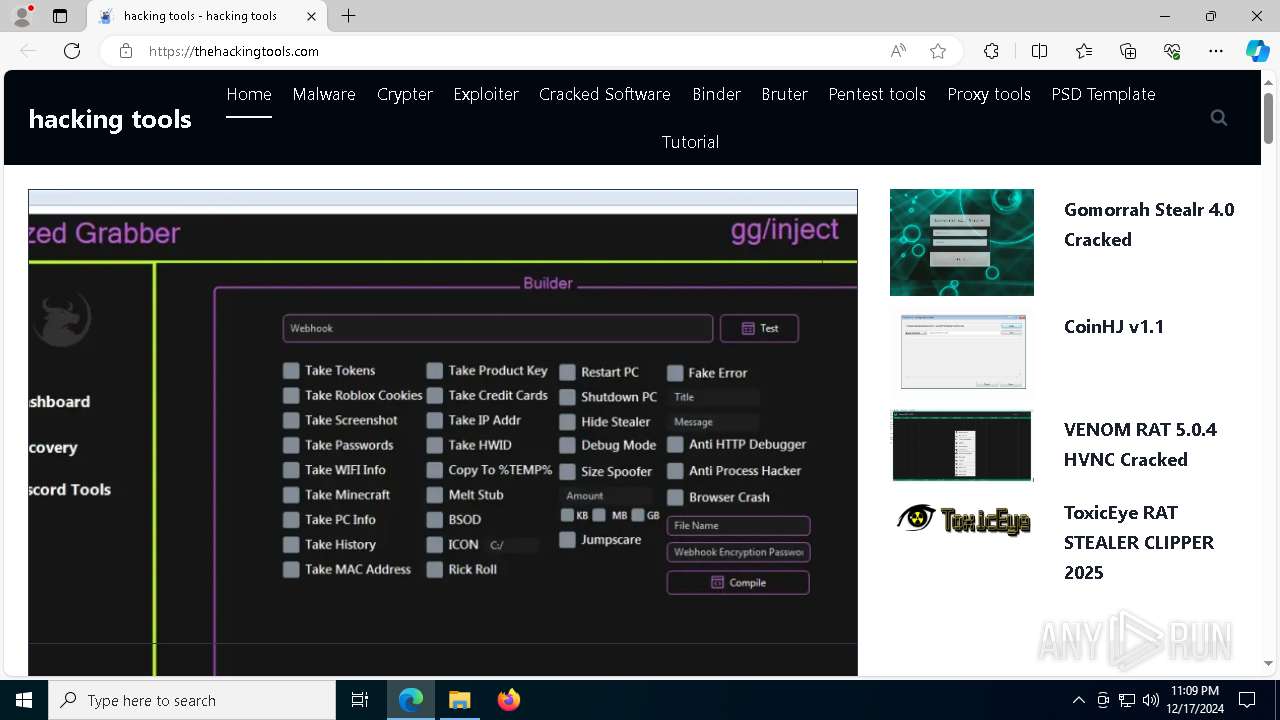
Zeus KINS 2.0 is known in cybersecurity as a variant of the Zeus banking trojan family. It is malware designed to steal sensitive financial and personal information from infected systems, often targeting online banking credentials.
Key aspect
Banking trojan designed for financial data theft
Targets login credentials and online banking sessions
Uses techniques like form grabbing and browser interception
Can inject malicious code into web sessions to alter transactions
Often spreads through phishing emails and malicious downloads
May include botnet-style remote control capabilities
Discover the power of BrutoForce Seed v12.6.8, the ultimate brute forcing tool designed to unlock the secrets of popular cryptocurrencies. This advanced software leverages cutting-edge algorithms to check and recover lost or forgotten cryptocurrency seeds, making it an invaluable asset for digital currency enthusiasts and security professionals.
**Key Features:**
* **Multi-Crypto Support:** BrutoForce Seed v12.6.8 supports a wide range of cryptocurrencies including Bitcoin (BTC), Ethereum (ETH), Litecoin (LTC), Binance Coin (BNB), Solana (SOL), and Tether (USDT).
* **High-Speed Processing:** Experience lightning-fast seed checking and recovery with our optimized brute forcing engine.
* **User-Friendly Interface:** The intuitive design ensures ease of use, allowing both beginners and experts to efficiently navigate and operate the tool.
* **Real-Time Results:** Get instant feedback on checked and found seeds, displayed clearly in the results window.
* **Secure and Reliable:** Your data security is our priority. BrutoForce Seed ensures all operations are conducted safely, without compromising the integrity of your information.
NanoCore RAT (Remote Access Trojan) 1.2.2.0 is a powerful and notorious Windows-based malware tool used for unauthorized remote system control. Initially marketed as a legitimate remote administration tool, it was later weaponized by cybercriminals for malicious purposes, including data theft, keylogging, and ransomware deployment.
Features
Live Screen Viewing: Real-time screen monitoring with mouse/keyboard control.
Webcam & Mic Access: Secretly activates cameras and microphones.
Process Manager: Kills security software (Antivirus, Firewalls).
Persistence Mechanisms: Installs itself in startup, registry, or as a Windows service.
UAC Bypass: Escalates privileges without triggering User Account Control.
Process Injection: Runs malicious code inside legitimate processes (e.g., explorer.exe).
WH Remote Manager is a secure remote administration and device management platform designed for IT professionals and support teams. It offers real-time monitoring, remote assistance, and advanced management tools for efficient system administration.
Key aspect
Secure remote device access
Real-time monitoring dashboard
Multi-device management support
Fast and lightweight performance
Encrypted communication system
User-friendly control panel
Remote troubleshooting tools
Activity logging and reporting
The Mirai Eye RAT 2025 (Remote Access Trojan) represents a dangerous evolution in the lineage of Mirai-related malware, shifting focus from the well-known IoT-targeting botnet activities to a highly targeted Windows-based spyware and backdoor tool. Unlike the original Mirai botnet, which gained infamy for compromising thousands of Internet
Short Description
Live Desktop Viewing
File Management
Command Execution
Clipboard Monitoring
Webcam & Mic Access
Browser Data Harvesting
DDoS Capability
Ransomware Module
Discord & Telegram Data Theft
SecureAuth Tester 2026 is an advanced cybersecurity auditing tool designed for ethical security testing and password strength analysis. It helps security professionals identify weak authentication practices and improve account protection through secure testing environments.
Key aspect
Password strength auditing
Secure authentication testing
Multi-layer security analysis
Real-time threat detection
Encrypted reporting system
Fast and lightweight performance
User-friendly dashboard
Remote Access Trojans (RATs) remain one of the most dangerous types of malware, allowing attackers to take complete control of infected systems. Mega RAT 1.5 Beta is an advanced malware, stealthy RAT that has recently emerged in cybercriminal forums.It enables remote access to webcams, files, keystrokes, and system controls, posing serious threats to privacy, data security, and network integrity.
Features Overview
Live screen viewing & remote desktop control
Keylogging (captures all keystrokes, including passwords)
Webcam & microphone hijacking (secretly records victims)Espionage (stealing sensitive data)
Financial theft (banking trojan capabilities)
Botnet recruitment (for DDoS attacks, spam, or crypto mining)
Ransomware deployment (as a secondary payload)
CoinHJ v1.1 is described in cybersecurity contexts as a type of malware that targets cryptocurrency transactions by monitoring the system clipboard. When a user copies a crypto wallet address, the malware can replace it with an attacker-controlled address, leading to unauthorized fund transfers.
Key aspect
Clipboard monitoring for copied text detection
Wallet address pattern recognition (crypto addresses)
Automatic replacement of copied wallet addresses
Support for multiple cryptocurrencies (e.g., BTC, ETH, TRX patterns)
Background execution with minimal user visibility
Persistence mechanisms for continuous operation
ColdSeal 5.6 is described in cybersecurity contexts as a tool often associated with encryption, obfuscation, or system protection bypass techniques. In “cracked” form, it is typically referenced in underground discussions as a modified version of software used outside its original licensing terms.
Key aspect
File encryption and data protection manipulation techniques
Obfuscation of executable code to avoid detection
System-level protection bypass mechanisms
Runtime decryption or unpacking behavior
Anti-analysis and anti-debugging techniques
Compatibility with multiple file formats or executables
Combat SMS Bomber 2026 is described in cybersecurity contexts as a type of abusive messaging tool designed to send a large volume of SMS messages to a target phone number in a short period of time.
Key aspect
High-volume automated SMS message generation
Target-based message flooding (single or multiple numbers)
Rapid message sending in continuous loops
Use of multiple APIs or gateways (in some variants)
Potential spoofing of sender identity
Overloading of SMS inbox and mobile services